The 2026 spring-summer activities of the Pollination Ecology Workgroup include participation in public events as well as various fieldwork.
Tomorrow, April 21, the Oecomess organized for students will take place in Oecologicum (J. Liivi 2). The event offers those interested the opportunity to get acquainted with the working groups operating within different departments and the topics of their thesis. The topics of the Pollination Ecology Workgroup's bachelor's and master's theses with their supervisors are listed here.
A few days later, from April 23 to 26, the working group will participate in the Rural Fair at the Tartu Fair Center (F. R. Kreutzwaldi 60). This is one of the largest rural and agricultural events in Estonia, where the working group will also introduce its research to a wider audience. Come visit us at booth C-40!
At the end of April, fieldwork will begin across Estonia under the leadership of the working group's scientists. During these, queen bumblebees will be observed searching for nest sites and data will be collected using disc traps to assess the condition of wild bees in agricultural landscapes (the fieldwork leader of the project funded by the Estonian Environmental Investment Centre is Research Fellow in Pollination Ecology Mari-Liis Viljur). Also, samples of various plant species will be collected from restored algal beds under the leadership of Research Fellow in Landscape Genetics Iris Reinula. “The samples obtained will be used to study the genetic and species diversity of plant species and the impact of restoration on them against the background of previously collected data,” said Iris Reinula.
The head of the workgroup, Associate Professor in Macroecology Tsipe Aavik and Iris Reinula will participate in the PopBio conference on plant population biology, which will take place from 6 to 9 May, this time in the city of Marburg, Germany. Iris Reinula will present the first results of landscape genetic analyses of medium-sized bluegrass (Briza media) at the conference. Marie, the representative of the FuncNet project led by the working group, will also give a presentation at the conference, talking about the landscape genetic studies conducted in the project with the Cowslips (Primula veris).
After PopBio, Tsipe Aavik will visit the Molecular Ecology Conservation Genetics Working Group at the University of Regensburg and hold a seminar on the research being carried out in the Pollination Ecology Working Group. This week, Senior Specialist for Research Projects Sigrid Ots will give a presentation at the Integrated Restoration Projects Network conference in Warsaw, where she will also talk about the activities of the “ForEst&FarmLand” project, which is being implemented with the participation of members of the Pollination Ecology Workgroup as well.
In June, the defenses of the final theses will take place at the University of Tartu. The schedule of the defenses of the Institute of Ecology and Earth Sciences can be found here. Rafael Somelar, will defend his master’s thesis, while Kärg Valner (in zoology) and Anne-Mai Adamberg will defend their bachelor’s theses. Tsipe Aavik will participate in the defenses as a member of the evaluation committee.
For more information:
Tsipe Aavik, tsipe.aavik@ut.ee
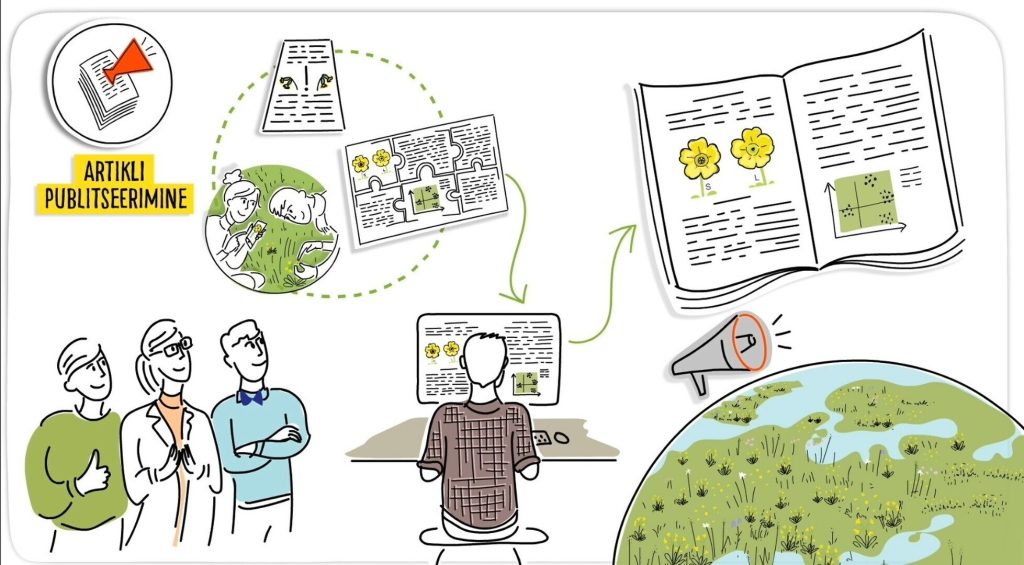
In an article published on ERR's science news portal Novaator, Tsipe Aavik, head of the Pollination Ecology Workgroup and Associate Professor of Macroecology, discusses how the pan-European cowslips campaign, which began in Estonia, not only enabled the gathering of new ecological knowledge but also prompted a look at citizen science itself. An analysis of interviews with the campaign's co-organizers revealed that stumbling blocks can include a lack of time, rigid funding rules, and regional cultural differences.
Read the article here (in Estonian).
Author of article: Jaan-Juhan Oidermaa
Author of photo: Joonmeedia
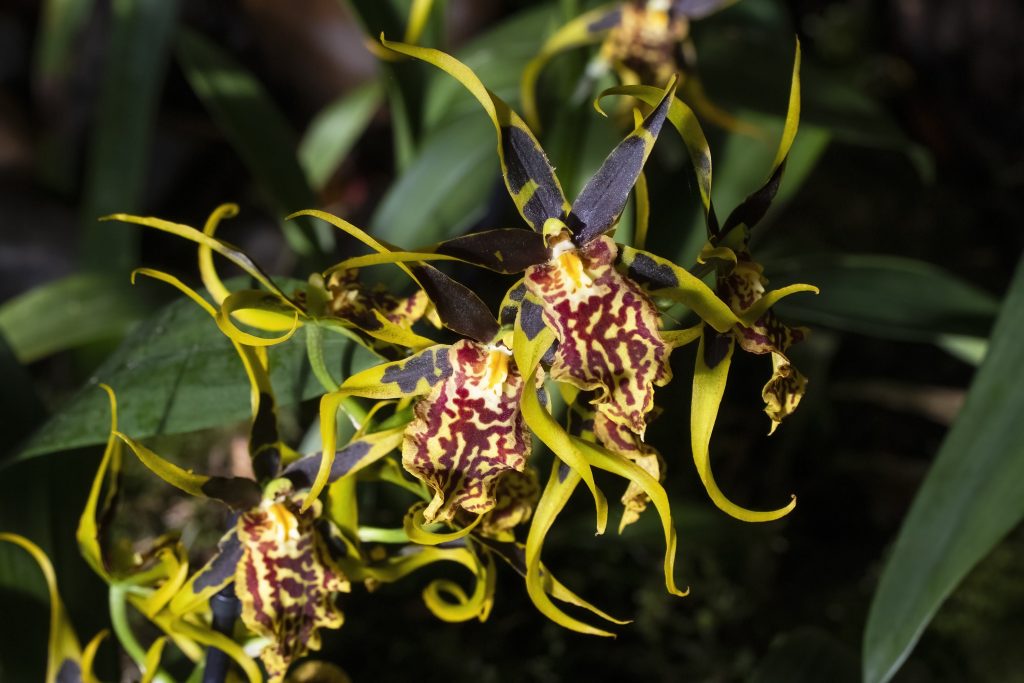
During the annual orchid exhibition at the University of Tartu Botanical Garden, a seminar was held for the second year in cooperation with the Estonian Orchid Conservation Club, offering fascinating presentations for both beginner orchid enthusiasts and experienced orchid experts.
The theme of this year's seminar was "Orchids and Pollinators". The topics discussed included the relationships between orchids and other organisms, the vulnerability of orchids in the context of climate change, their pollination strategies, and the challenge of photographing orchid bees.
“In Estonia, orchid pollinators have been studied very little, as the life cycle of orchids is quite complex and their survival rate is extremely low compared to many other plant groups. Therefore, growing orchids from seeds seems impossible – after all, orchids in nature need the help of a fungus, because the seed lacks endosperm,” says Anne-Mai Adamberg, president of the Orchid Conservation Club and also a bachelor's student in the Pollination Ecology Working Group, who gave an overview of the pollinators of Estonian orchid species.
The presentations given at the orchid seminar held on March 5 can be found here: https://natmuseum.ut.ee/et/uudis/nuud-jarelvaadatav-botaanikaaia-orhideeseminar.
More information:
Anne-mai Adamberg
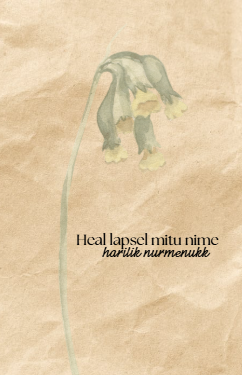
Since being Estonian and Estonian culture are closely intertwined with nature, both contemporary and earlier literature often includes descriptions of plants growing in forests, meadows, bogs and fields. In the spirit of this Mother Language Month, it is fitting to see under what names the cowslips, the emblem of the pollination ecology working group, has found a home in the Estonian language and literature.
The recently published poetry collection "Hortus poeticus. A selection of Estonian plant poetry" contains poems about 140 plants growing in Estonia, among which the common cowslips (Primula veris) is also represented through Kersti Merilaas' poem.
According to the book "Estonian plant names", the cowslips´ has as many as 208 folk names, of which Gustav Vilbaste has recorded 116:
härjalaatsad, härjakaapst, härjakapsas, härjakatsud, härjakadsad, härjakaatsad, härjakats, härgkaatsad, jaani-lill, juudipüksid, kaatsad, kanna kaltso, kana-kaltsa', kanakaltsud, kanakollad, kanapasa-lill, kanna warbas, kana-warwad, kanavarbad, kassikäpp, kevadevõti, kikaspüks, kikkakaatsa, kikkapüks, koisid viinalillid, koisi viinalilled, koldsed viinalilled, kolsi wina lillid, kollane tinaneitsi, kollanokk, kotsid wina lilli, konnaninn', kortled, kukekaatsad, kukekalts, kukekannus, kukepüks, kukesõrmkindad, kukulinnu-käekaatsas, kukulinnu ätses, kukulinnu-sõrmikindad, kuldkannike, kurekaats, käkaadsed, käekaats, käekaatse, käekarts, käekatsas, käägats, käekatse, käekaasuke, käekaisuke, käekaitsas, käekaitse, käekaitsja, käekasu, käekasukas, käekaltsud, käokaatsad, käokannus, käokeel, käukäpp, metstubakas, mäelilled, nattalillid, natt-nunnid, neitsipisar, neitsi-tinnad, neiulill, nurmekaasuke, nurma nudkud, nurmenukk, nurmenupp, nurmekäpp, Peetruse võtmed, Peetruse võtmelilled, nullernukk, piimapisar, pääsukese-silm, pääsulill, saksapüks, savilill, sõrmlill, sõrmkinnas, sõrmelill, sõrmiklill, sõrmkübar, taevavõti, titepüksid, titevarrus, valurohi, viinalilled, võtmelill, võtmalill, võtmekimp, ärgats, õlkalill, rotsid wina lilli, kanakoiv, kanakoole, kanapasalill, kanaperse, kikkamunn, kikkapael, koeratubakas, kukehari, kukevarvas, pasklill, piimakinnas, piimapüks, priimula, saviõis, taevasilm, tubak, vanapoisi silmavesi, vargapoisi varvas, võipätt, võipätakas.
Have a beautiful upcoming Mother Language Day!
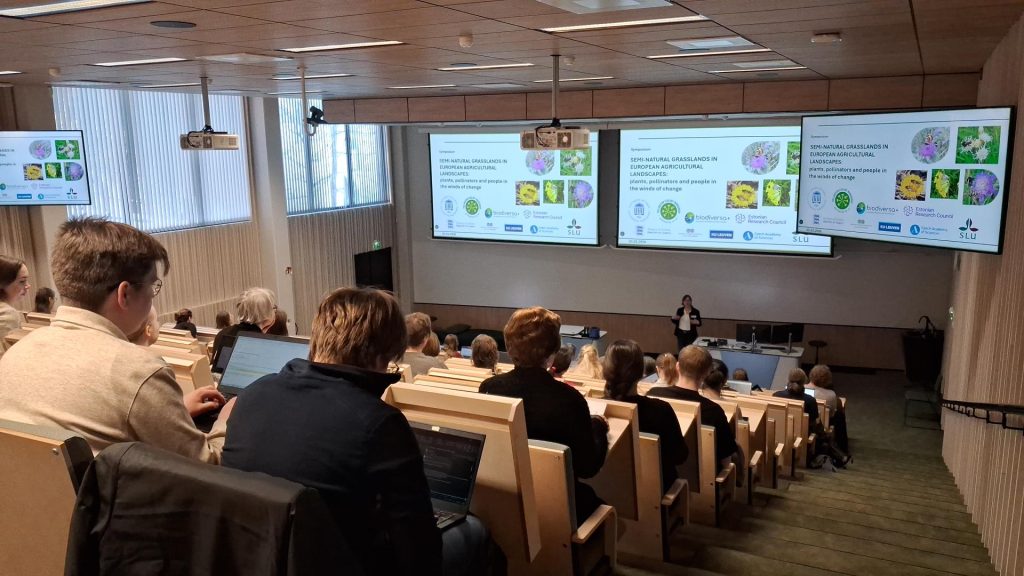
In early February, an international symposium “Semi-natural grasslands in the European agricultural landscape: plants, pollinators and people in the winds of change” took place, where participants discussed the role of semi-natural grasslands and other grassland communities in maintaining the multi-layered biodiversity of Europe’s agricultural landscapes.
The presentations provided an overview of ecological processes and patterns in semi-natural grasslands both below- and aboveground, spanning genetic to landscape scales. Among other things, it was discussed how these valuable communities in terms of both biodiversity and socio-economic benefits could continue to be seen in our landscapes despite changes in land use patterns. The symposium brought together both state representatives and renowned scientists from Estonia and several parts of Europe, who shared knowledge and experience and sought solutions to support more sustainable land use in their presentations.
The presentations from the symposium are now available for viewing and downloading online. You can find them here: https://ecobank.ut.ee/symposium.html.
We would like to thank all the speakers and participants once again for the fruitful day of discussion!
Tsipe Aavik, tsipe.aavik@ut.ee
Sigrid Ots, sigrid.ots@ut.ee
The Pollination Ecology Working Group of the Department of Botany of the University of Tartu will organize a symposium on February 5th, where the factors shaping the relationships between plants and pollinators in semi-natural grasslands and similar grassland habitats, which are the cornerstones of biodiversity in European agricultural landscapes, will be discussed. The role of land users in maintaining these ecosystems will also be discussed.
The international symposium “Semi-natural grasslands in the European agricultural landscape: plants, pollinators and people in the winds of change” offers an excellent opportunity to exchange knowledge and experience, and to seek solutions for supporting biodiversity and sustainable land use in Europe’s grasslands. It also marks the concluding event of the Biodiversa+ Partnership Programme project “The Role of Functional Connectivity of Semi-natural Grassland Networks in Maintaining Plant–Pollinator Interactions” (FuncNet).
The event will be held in English.
Agenda:
9:30 coffee and snacks
10:00 Tsipe Aavik (University of Tartu) welcoming remarks and introductory presentation „FuncNet: Improving the functional connectivity of grassland networks”
10.30 Jan Plue (Swedish Agricultural University) “Recent land-use change across NW-Europe and implications for understanding biodiversity patterns”
11.00 Maie Kiisel (University of Tartu) „Meadow connectivity in the landscape of social institutions: historical legacy and challenges for the future”
11.30 break
11.45 Timo Kark (Ministry of Climate) “Current status, trends and challenges in nature conservation”
12.15 Hana Pánková (Czech Academy of Sciences) “Rescue planting in private gardens - a novel approach for ex situ conservation”
12.30 Iris Reinula (University of Tartu) „Mapping Europe's genetic diversity for conservation, using the example of Estonia”
12.45 joint lunch (on the 1st floor of Oecologicum)
14.00 Sabrina Träger (Martin Luther University of Halle-Wittenberg) „Diversity wherever you look: various perspectives on plants and their interactions for conservation”
14.30 Zuzana Münzbergová (Czech Academy of Sciences) "Plant-soil interactions in grasslands and their role in grassland stability"
15.00 Tomáš Dostálek (Czech Academy of Sciences) „Drivers of reproductive success in Primula veris: A cross-country analysis of landscape and population factors”
15.15 Marie Ende (Martin Luther University of Halle-Wittenberg) „Genetic responses of Primula veris to landscape configurations across five European countries”
15.30 break
15.45 Hans Jacquemyn (KU Leuven) „Constructing plant–pollinator networks using pollen metabarcoding: insights into landscape-scale pollinator foraging”
16.15 Epp Valdaru (University of Tartu) “Effects of land-use changes on plant-pollinator functional communities”
16.30 Arne Devriese (University of Tartu) “A neutral approach to plant pollinator interactions”
16:45 closing remarks
The event will take place in Tartu, in the conference hall of the Oecologicum academic building (J. Liivi 2) and in web:
Join Zoom Meeting
https://ut-ee.zoom.us/j/97355916086?pwd=WQYDOaoJsN6TargOhjab6PVyOon0hg.1
Meeting ID: 973 5591 6086
Passcode: 453420
The organizers ask you to register for the event for the 3 February here: https://forms.office.com/e/mdy8Jrf0r6?origin=lprLink&lang=EN
Contact:
Tsipe Aavik, tsipe.aavik@ut.ee
Sigrid Ots, sigrid.ots@ut.ee
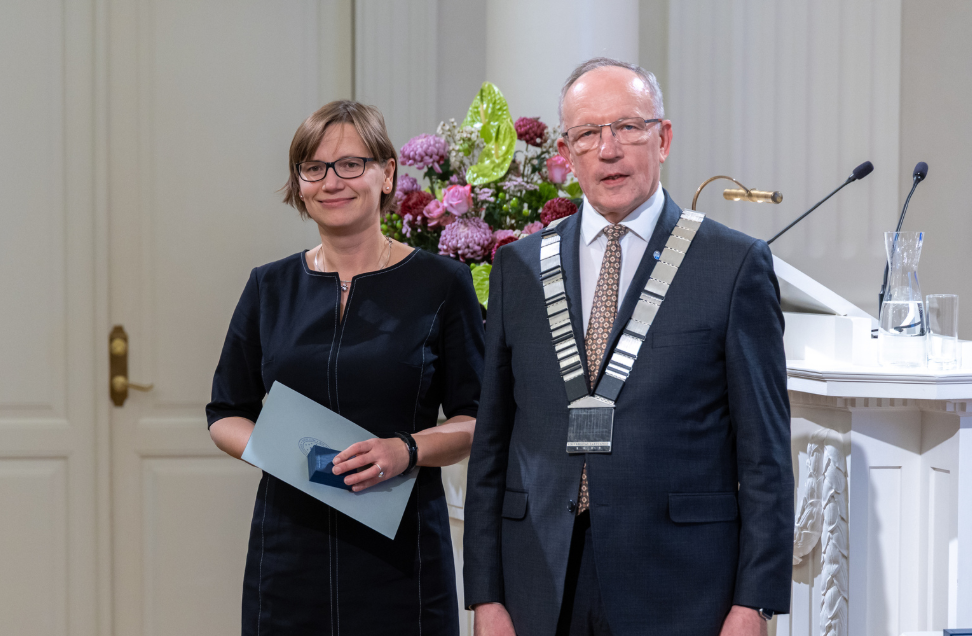
By decision of the University of Tartu Senate this year, Associate Professor Tsipe Aavik, head of the Pollination Ecology Workgroup, was recognized for her excellent work and significant contribution to the university’s activities. The decoration was presented by Rector Toomas Asser at the ceremonial event held on 21 November in the University of Tartu Assembly Hall.
Congratulations, Tsipe!
The names of all recipients of the university decorations are published on the university’s intranet. The ceremony can be rewatched here.
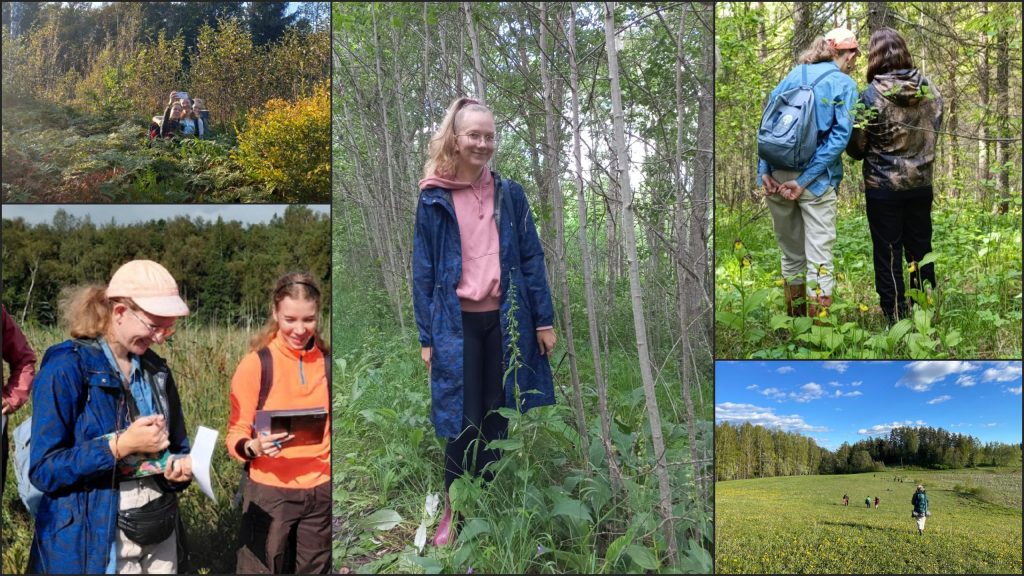
This year, the Institute of Ecology and Earth Sciences recognized six second- or third-year undergraduate students who have demonstrated outstanding professional engagement and strong academic performance. The scholarship is awarded to students whose activities go beyond the minimum requirements of the curriculum, including participation in research or teaching, promotion of their field, and societal contributions that support the development of their discipline.
In the Biology and Biodiversity Conservation programme, the award went to Anne-Mai Adamberg, a student in the Pollination Ecology Workgroup.
For nearly a year, Anne-Mai Adamberg has served as the President of the Estonian Orchid Protection Club and has assisted the Semi-Natural Community Conservation Association in conducting permanent grassland inventories. In addition, she is actively involved in the Tartu University Student Nature Conservation Circle and will soon become a member of the Estonian Naturalists’ Society.
Congratulations, Anne-Mai!
Read the news here (in Estonian).
On 5 February next year, the Pollination Ecology Workgroup at the University of Tartu will host the symposium “Semi-natural grasslands in the European agricultural landscape: plants, pollinators and people in the winds of change.” The event will focus on the factors shaping the relationships between plants and pollinators in semi-natural grasslands and similar grassland habitats – cornerstones of biodiversity in European agricultural landscapes – and on the role of land users in maintaining these ecosystems.
The international symposium will feature presentations by both early-career researchers and leading European scientists in grassland ecology, with speakers including Zuzana Münzbergová (Czech Academy of Sciences), Hans Jacquemyn (KU Leuven, Belgium), Jan Plue (Swedish University of Agricultural Sciences) and Sabrina Träger (Martin Luther University Halle-Wittenberg, Germany). Timo Kark from the Estonian Ministry of Climate will contribute insights from a policy and practitioner perspective.
The symposium offers an excellent opportunity to exchange knowledge and experience, and to seek solutions for supporting biodiversity and sustainable land use in Europe’s grasslands. It also marks the concluding event of the Biodiversa+ Partnership Programme project “The Role of Functional Connectivity of Semi-natural Grassland Networks in Maintaining Plant–Pollinator Interactions” (FuncNet).
The event takes place in Oecologicum (Tartu, J. Liivi 2). More detailed information about the programme and registration will be sent out in the first half of January.
Contact:
Tsipe Aavik, tsipe.aavik@ut.ee
Sigrid Ots, sigrid.ots@ut.ee
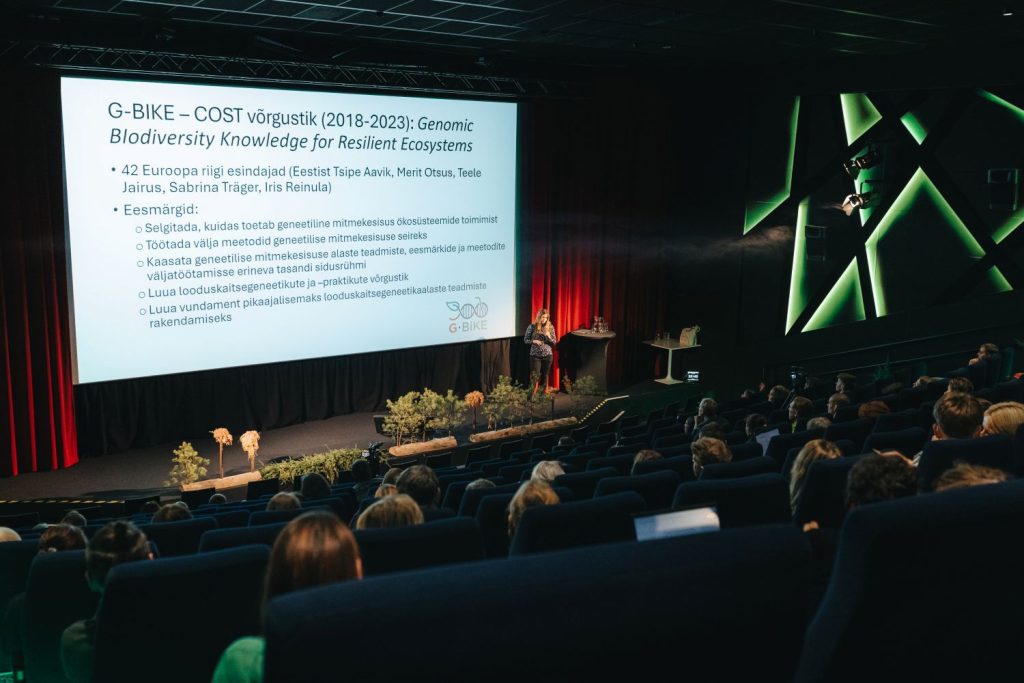
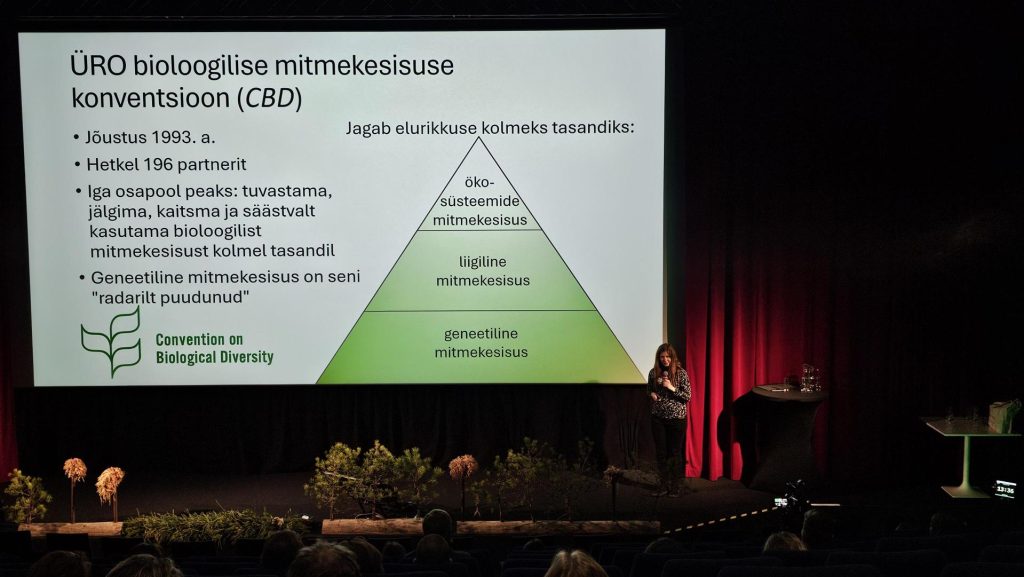
Until very recently, intraspecific diversity, i.e., genetic diversity, remained unnoticed in agreements on biodiversity conservation. Yet, this invisible biodiversity is the foundation for populations to cope with environmental changes and hence requires special attention.
The Convention on Biological Diversity was recently amended by adding genetic diversity as one of the key components in assessing biodiversity. This will entail a first-time obligation for countries that have ratified the convention to report on the status of the genetic diversity of species. The first-ever monitoring of genetic diversity is supported by the pan-European COST network GENOA, where Estonia is represented by Iris Reinula, a research fellow in landscape genetics at the Pollination Ecology workgroup at the University of Tartu, and Associate Professor Tsipe Aavik, the head of the Pollination Ecology workgroup. Last week, Iris Reinula presented the monitoring framework at the Nature Conservation conference organized by State Forest Management Centre in Saaremaa.
“In principle, genetic data is not always necessary for the assessment – indirect proxies can be derived from other well-known measures, such as population sizes,” said Iris Reinula, who spoke about mapping invisible biodiversity using the example of Estonia at a recent nature conservation conference. “We are currently collecting data from various data sources, but this has proven to be more difficult than expected. Data is insufficient for many species; it is quite scattered or collected using different methodologies. However, we are confident that for many species, the status of genetic diversity can be assessed and accounted for in nature conservation without picking up a pipette, i.e., indirectly using population sizes and other already available data.”
For comprehensive species conservation, more attention must be paid to ensuring and monitoring genetic diversity in the future. To this end, indicators are being developed that can make the hitherto complex assessment of genetic diversity easier and take it out of the laboratory.
The RMK nature conservation conference “Restoration and protection of habitats” took place on 30–31 October 2025 in Kuressaare.
Tsipe Aavik / tsipe.aavik@ut.ee / +372 516 1187