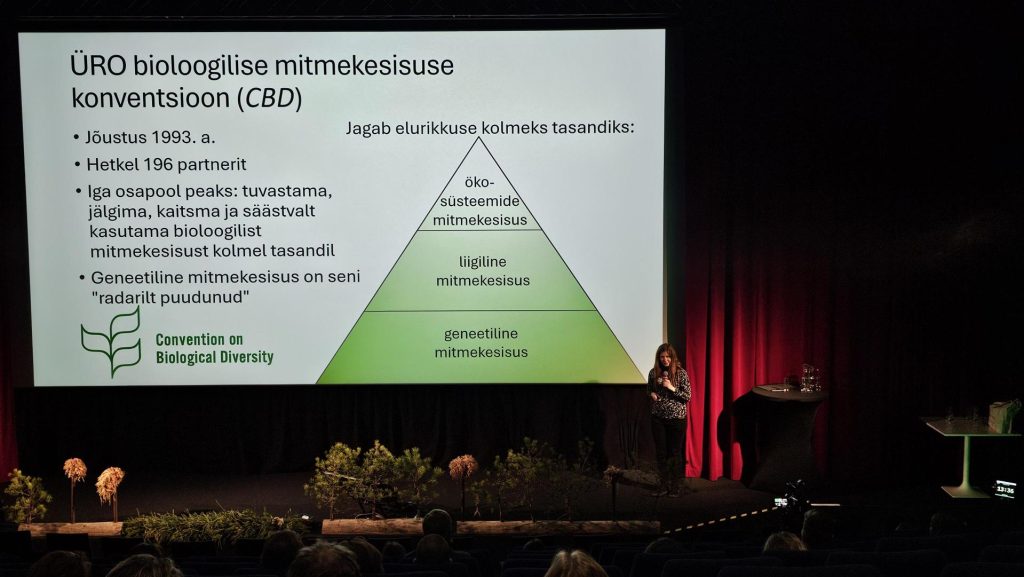
Until very recently, intraspecific diversity, i.e., genetic diversity, remained unnoticed in agreements on biodiversity conservation. Yet, this invisible biodiversity is the foundation for populations to cope with environmental changes and hence requires special attention.
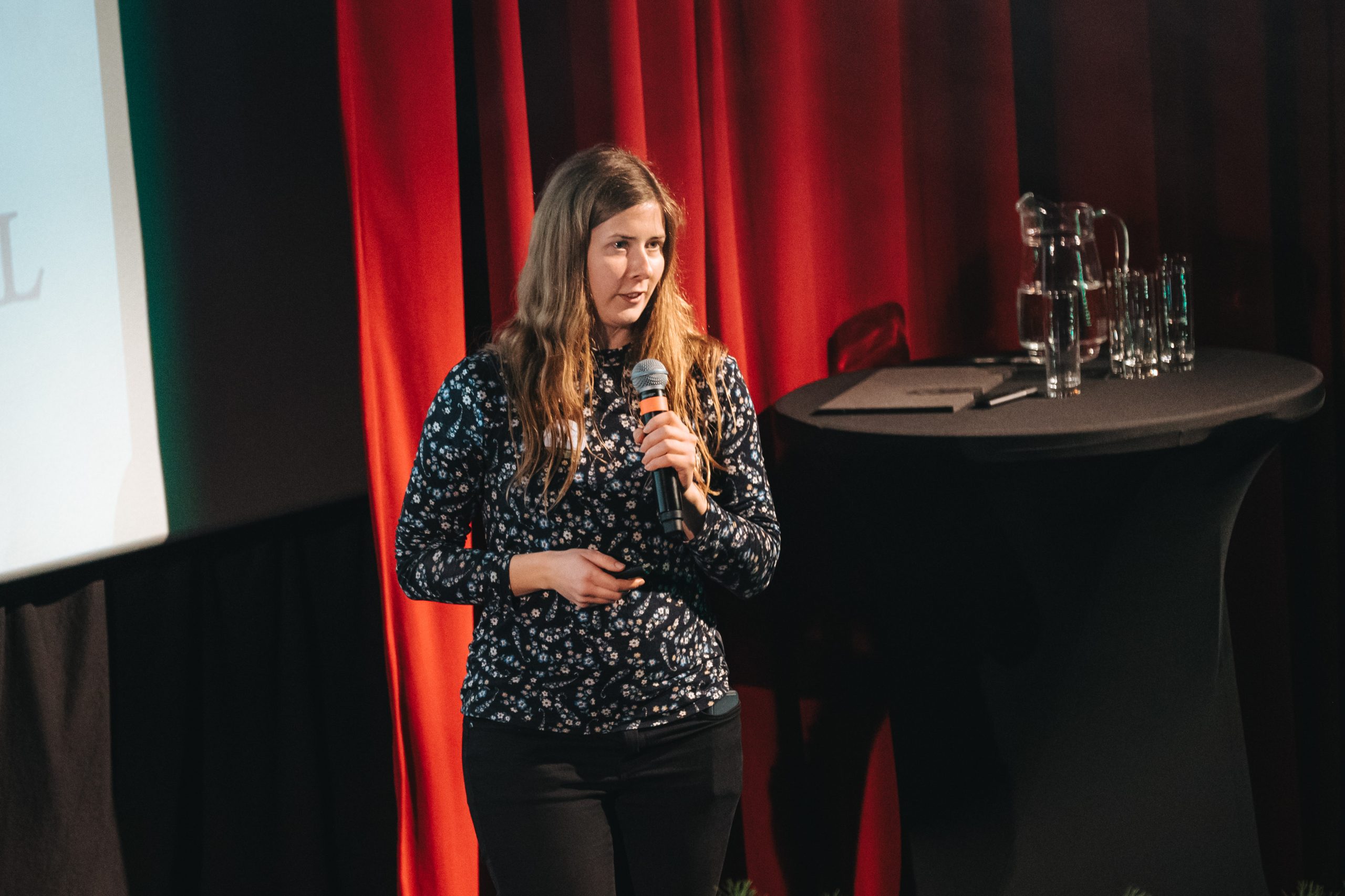
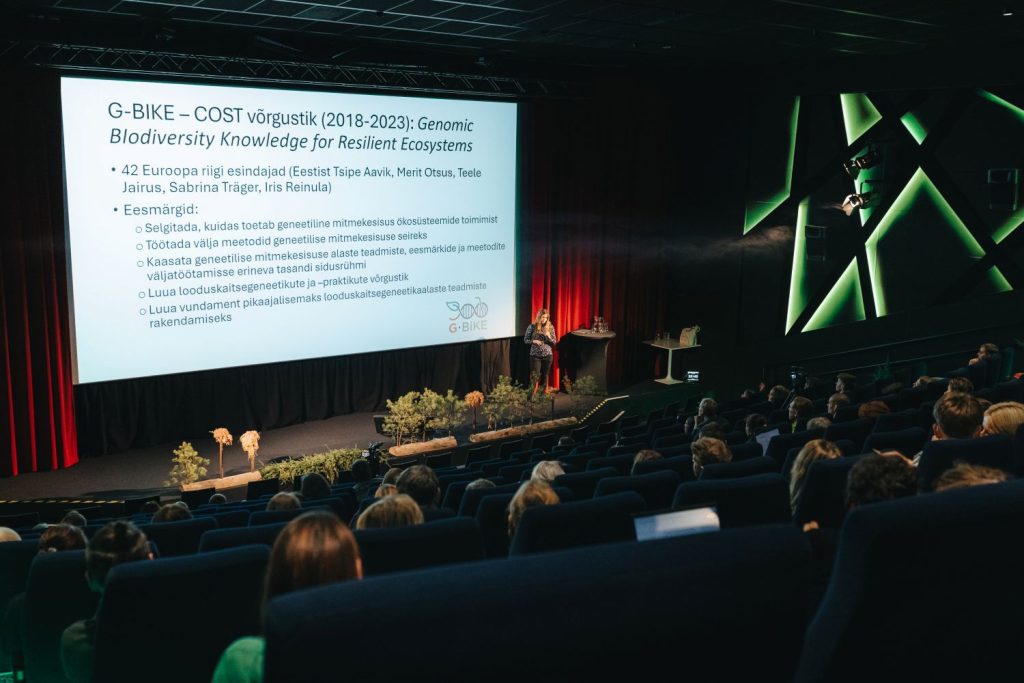
The Convention on Biological Diversity was recently amended by adding genetic diversity as one of the key components in assessing biodiversity. This will entail a first-time obligation for countries that have ratified the convention to report on the status of the genetic diversity of species. The first-ever monitoring of genetic diversity is supported by the pan-European COST network GENOA, where Estonia is represented by Iris Reinula, a research fellow in landscape genetics at the Pollination Ecology workgroup at the University of Tartu, and Associate Professor Tsipe Aavik, the head of the Pollination Ecology workgroup. Last week, Iris Reinula presented the monitoring framework at the Nature Conservation conference organized by State Forest Management Centre in Saaremaa.
“In principle, genetic data is not always necessary for the assessment – indirect proxies can be derived from other well-known measures, such as population sizes,” said Iris Reinula, who spoke about mapping invisible biodiversity using the example of Estonia at a recent nature conservation conference. “We are currently collecting data from various data sources, but this has proven to be more difficult than expected. Data is insufficient for many species; it is quite scattered or collected using different methodologies. However, we are confident that for many species, the status of genetic diversity can be assessed and accounted for in nature conservation without picking up a pipette, i.e., indirectly using population sizes and other already available data.”
For comprehensive species conservation, more attention must be paid to ensuring and monitoring genetic diversity in the future. To this end, indicators are being developed that can make the hitherto complex assessment of genetic diversity easier and take it out of the laboratory.
The RMK nature conservation conference “Restoration and protection of habitats” took place on 30–31 October 2025 in Kuressaare.
Tsipe Aavik / tsipe.aavik@ut.ee / +372 516 1187