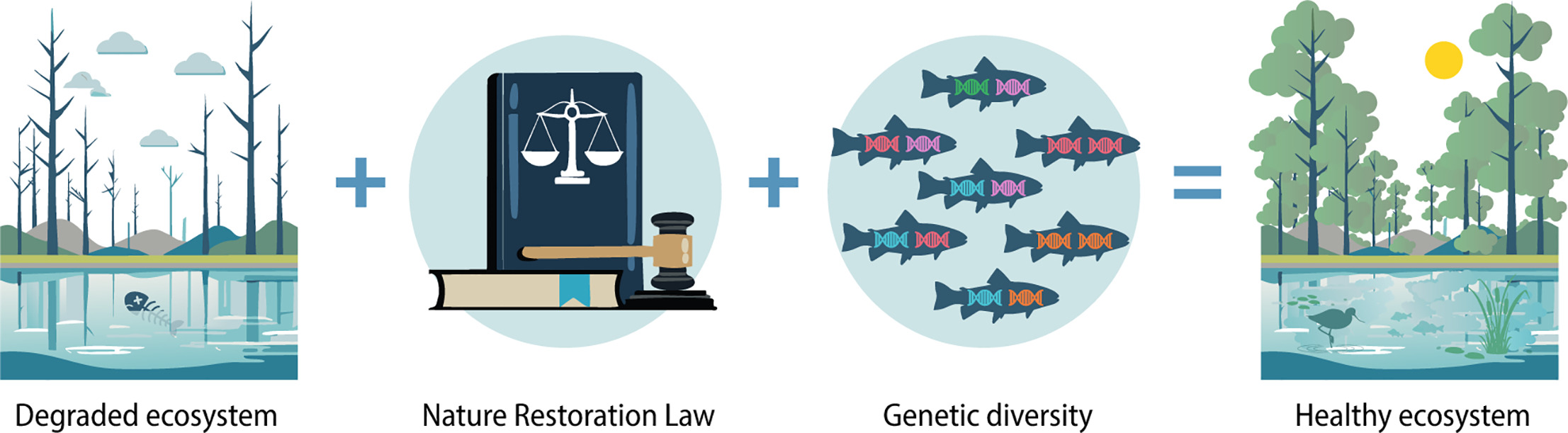
People and governments are recognising that the world faces a biodiversity crisis. Nature is struggling in the face of new diseases, climate change and other human pressures. However, animals, plants and fungi have a powerful tool to adapt these pressures: the variation within their genes.
A group of scientists from across Europe and North America has come together to see if the conservation of this genetic diversity could be incorporated in the implementation of the European Union’s new flagship conservation legislation, the Nature Restoration Regulations. They found case studies across the continent that could form a blueprint which could easily be transferred to any country or even cross-border projects. From Polish bison to wildflowers in Belgium, there is clear evidence that genetic diversity is vital for nature recovery.
Genetic diversity gives populations the ability to adapt. Naturally occurring genes convey resilience to drought, high temperatures, new diseases and other threats. Variation is found in wild populations: think for example of the slight differences in colour and shape within any species of wildflower. Populations can lose this variation if they become too small or fragmented however, meaning that conservationists and other land-managers need to include safeguarding genetic diversity when they plan. The group’s research showed that genetic diversity can be included in nature restoration and that there were cases across Europe where this had enhanced the effectiveness of conservation projects.
Co-author Professor Linda Laikre of Stockholm University said: “We carefully reviewed the text of the Nature Restoration Regulations and found many opportunities to incorporate genetic diversity in how it could be implemented through National Restoration Plans. Monitoring and reporting on genetic diversity is now affordable and practical and can also tell us whether the Regulation’s aspiration to enhance connectivity is successful. Indeed, our recommendations can be applied in any region of the globe.”
Study coordinator Dr David O’Brien of NatureScot said: “People are often put off incorporating genetics in action plans and projects, but our work shows that is relatively simple. Further, it is easy for land managers like farmers and foresters to take an active role, as they often use the same approaches with domesticated species. We believe that genetic diversity can be incorporated into every country’s Nature Restoration Plans and can make a major difference to the success of conservation at a continental level.”
Article “The Restoring genetic diversity to facilitate the implementation of the EU Nature Restoration Law" publiched in Biological Conservation.
Tsipe Aavik / tsipe.aavik@ut.ee / +372 516 1187